Posts

Showing posts with the label archbishop

St. Heribert of Cologne

He was born in Worms, the son of Hugo, count of Worms. He was educated in the school of Worms Cathedral and at the Benedictine Gorze Abbey in Lorraine. He returned to Worms Cathedral to be provost and was ordained a priest in 994. In the same year Otto III appointed him chancellor for Italy and four years later also for Germany, a position which he held until Otto's death on 23 January 1002. Heribert accompanied Otto to Rome in 996 and again in 997, and was still in Italy when he was elected Archbishop of Cologne. At Benevento he received investiture and the pallium from Pope Sylvester II on 9 July 999, and on the following Christmas Day he was consecrated at Cologne. In 1002, he was present at the death-bed of the emperor at Paterno. While returning to Germany with the emperor's remains and the imperial insignia, he was held captive for some time by the future Henry II, whose candidacy he at first opposed, but whom he served faithfully subsequently. ShrineIn 1003 Heribert fou...

St. John Chrysostom

Image
Antioch was a capital city subject to the Roman emperor Theodosius I in 344, the year John Chrysostom was born. He was the only son of the chief commander of the Roman Imperial Army based in Syria. His mother was a Christian. Widowed at the age of 20, she never remarried but made the spiritual instruction of her children her highest priority. Eloquence was the highest art form of the time and so John studied under the most famous orators of the age, He trained under the masters of science and literature and his advanced studies included philosophy and religion. His genius became apparent as he pleaded legal cases before the bar and at twenty, John was already famous. His interests then turned away from the world of wealth and opportunity that was already his, and he began a serious study of Sacred Scripture. Rejecting worldly ideas, he spent his time in prayer and silence while adopting austere penitential practices. He became aware that prayer was the great channel of heavenly grace...

St. Boniface

Image
St. Boniface was born at Crediton, or Kirton, in Devonshire, about the year 680, and at his baptism named Winfrid. When he was but five years old, his chief delight was to hear holy men converse about God and heavenly things. The edifying deportment and holy instructions of certain pious monks, who, being employed in preaching in that country, happened to come to his father's house, gave him a strong desire to devote himself to God in a religious state; and though he was then only a child, the deep impressions which their words left upon his heart were never after effaced. His father exerted his whole authority to divert him from his inclination to a monastic life; till being visited by a dangerous sickness, he acknowledged in it the hand of God, chastising him for opposing his son's vocation, which he from that time gave him free leave to pursue. Winfrid was educated from thirteen years of age in the monastery of Escancester, or Exeter, under the holy abbot Wolphard. With the ...

Saint Gregory Nazianzen and Saint Basil the Great

Image
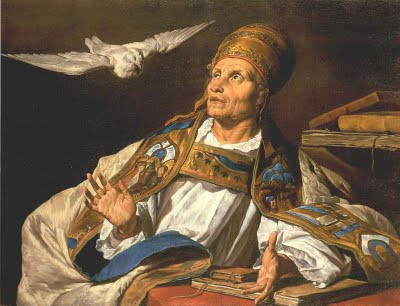
Saint Gregory Nazianzen Gregory was born in 329-330 near Nazianzus, in Cappadocia (Asia Minor). During his youth attended school in Caesarea of Cappadocia, and later the Christian school of Caesarea in Palestine, where he learned rhetoric, and that of Alexandria. Finally went to Athens and became a philosophy, a teacher Christians and pagans. There he began his friendship with St. Basil the Great, which was to last a lifetime. When Basil went to Cappadocia to devote himself to God, Gregory remained in Athens. However, almost secretly, one day left town and returned to Nazianzus. He received baptism and became a monastic life with Basil. On Christmas Day 361 he was ordained priest and in 372 was consecrated bishop by St. Basil Sasima, then Metropolitan of Cappadocia, while never taking his seat, having been put in charge of the Church in his hometown . On the death of the Arian emperor Valens, the Catholics of Constantinople was asked to take charge of the ecclesiastical reorganization ...

Pope Gregory III

Image
A Syrian by birth (the last pope to date born outside of Europe), he succeeded Gregory II in March 731. His pontificate, like that of his predecessor, was disturbed by the iconoclastic controversy in the Byzantine Empire, in which he vainly invoked the intervention of Charles Martel. Pope Gregory III - Pontyfikats medal of the 8th century - obvers. Pope Gregor III - Pontyfikats medal of the 8th century - reverse.Elected by popular acclamationy, he was the last pope to seek the Byzantine exarch's mandate. Gregory immediately appealed to the Byzantine Emperor Leo III to moderate his position on the iconoclastic controversy. When this elicited no response, Gregory called a synod in November 731, the latter decided to bring the Pope under control. This included appropriating papal territories, and transferring ecclesiastical jurisdictions to the Patriarch of Constantinople. Gregory's support of the empire led him to help contribute to the recapture of Ravenna after it had fallen to...

The Feast of Our Lady of the Miraculous Medal

Image
The Miraculous Medal was a medal invented by Saint Catherine of Labouré, after the Virgin Mary appeared to her. The virgin told her that times of evil were in France and in the world. On November 27 1830 Catherine reported the Virgin had appeared again in an oval frame, standing upon a globe, wearing many rings of different colors, most of which shone rays of light over the globe, and stepping on a head of a serpent. On the frame it said in Latin Ô Marie, conçue sans péché, priez pour nous qui avons recours à vous. Meaning in English O Mary, conceived without sin, pray for us who have recourse to thee. Catherine saw the frame rotate there was a cross with a letter M, surrounded by twelve stars, and had the Sacred Heart of Jesus and The Immaculate Heart of Mary. Catherine asked why some of the Virgin's rings were not shedding light.The Virgin said those were graces people forgot to ask for. The Virgin asked to take the image to the priest. So they can put on medallions so the people...