Posts

Showing posts with the label Immaculate Conception

The Annunciation of Christ

Image
The story of the Annunciation, meaning the announcing, from the Latin annuntiare, is told in Luke's gospel. At the Annunciation, the angel Gabriel announces to Mary that she will conceive a Son, and his name will be Jesus. His greeting, "Hail Mary, full of grace, the Lord is with you" has echoed down through the ages in many prayers, and is known as the "Hail Mary." Mary is initially confused as to how she will bear God's Son, seeing as she is a virgin. The angel then explains that the Holy Spirit will come upon on her. This is why when we recite the Nicene creed we say "by the power of the Holy Spirit, [Jesus] was born of the Virgin Mary and became man." The Apostles Creed likewise affirms that Jesus was "conceived by the power of the Holy Spirit." Thus, the Feast of the Annunciation is the beginning of Jesus' miraculous life, and it begins with the theotokos conceiving Jesus by the Holy Spirit's power. Mary's response to the...
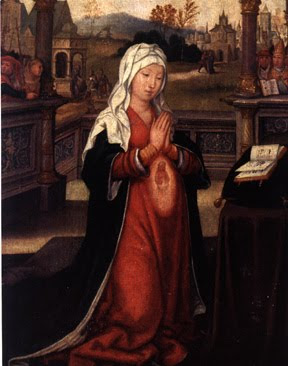
Immaculate Conception

Image
In the eighth century it became a feast of the Roman Catholic Church. It is the only one of Mary's feasts that came to the Western Church not by way of Rome, but instead spread from the Byzantine area to Naples and then to Normandy during their period of dominance over southern Italy. From there it spread into England, France, Germany, and eventually Rome. Prior to Pope Pius IX's definition of the Immaculate Conception as a Roman Catholic dogma in 1854, most missals referred to it as the Feast of the Conception of the Blessed Virgin Mary. The festal texts of this period focused more on the action of her conception than on the theological question of her preservation from original sin. A missal published in England in 1806 indicates the same collect for the feast of the Nativity of the Blessed Virgin Mary was used for this feast as well. The first move towards describing Mary's conception as "immaculate" came in the eleventh century. In the fifteenth century Pope S...