Posts

Showing posts with the label Bishop

St. Frumentius

Image
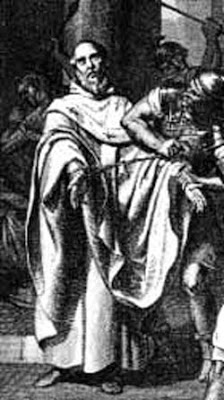
Saint Frumentius was the first Bishop of Axum, and he is credited with bringing Christianity to Aksumite Kingdom. He was a Syro-Phoenician Greek born in Tyre. According to the 4th century historian Rufinus (x.9), who cites Frumentius' brother Edesius as his authority, as children (ca. 316) Frumentius and Edesius accompanied their uncle Meropius on a voyage to Ethiopia. When their ship stopped at one of the harbors of the Red Sea, people of the neighborhood massacred the whole crew, with the exception of the two boys, who were taken as slaves to the King of Axum. The two boys soon gained the favour of the king, who raised them to positions of trust, and shortly before his death, gave them their liberty. The widowed queen, however, prevailed upon them to remain at the court and assist her in the education of the young heir, Ezana, and in the administration of the kingdom during the prince's minority. They remained and (especially Frumentius) used their influence to spread Christi...

St. Fulk of Pavia

Image
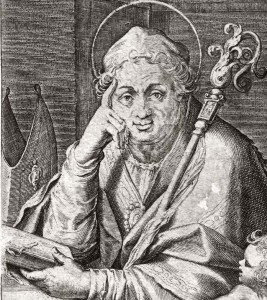
Fulk of Pavia was born at Piacenza, Italy in 1164 and died 1229. Fulk's parents were Scottish. He was appointed to a canonry in Piacenza. Then, after his studies in Paris, he became archpriest and bishop of Piacenza. Six years later he was transferred by Honorius III to the see of Pavia, which he occupied for 13 years. He was cannonised and his feast day is 26 October.

St. Anthony Mary Claret

Image
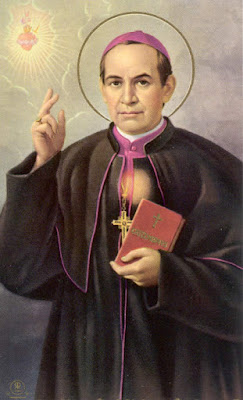
Anthony Claret was born on December 23, 1807, is Sallent, Spain, the fifth child of John Claret and Josephine Clara. Anthony's vocation to the Priesthood became evident at a very tender age. However, the financial circumstances of the family made it necessary for him to spend his early youth helping his father in the weaver's shop. When his help was no longer an absolute necessity in the home "the weaver's son" entered the Seminary in Vich, and was raised in the Holy Priesthood on June, 13, 1835. The activities of the ministry in a small-town parish were unable to satisfy the yearnings of Claret's great soul. He preached first in his own Diocese and later, at the invitation of the other Bishops, he covered all of Spain and the Canary Islands. He is also known to have many a time delivered as many as eight sermons in one day and often to have heard confessions for ten solid hours without interruption. Everywhere he went miracles of conversion were recorded and ...

St. Ignatius of Antioch

Image
The doors open slowly. Bodies like ghosts walk in the sand. Squinting eyes that used to live in the shadows of the dungeon, suddenly receive sunlight. The roar of the crowd ends up waking. Move aimlessly, some holding hands, others alone and sad eyes reflecting fear and bewilderment. The trumpets sound. String sounds are heard everywhere and the center of the earth bloodthirsty beasts emerging: Panthers, African lions, hyenas. The party has begun! Circus Maximus is offered to the Romans the spectacle of death to hundreds, perhaps thousands of Christians, witnesses of their faith in Christ. Are the times of Emperor Trajan, back in the years 98 to 117 of our era when being a Christian meant to give one's life. Puddles of blood flood the place, mangled and dismembered members everywhere, a plaintive cry and suffering of someone who has survived. The night has come and blanket the pines and cypresses of the Roman hills. And among the moans and groans are heard vibrating words of an old...

St. Heribert of Cologne

He was born in Worms, the son of Hugo, count of Worms. He was educated in the school of Worms Cathedral and at the Benedictine Gorze Abbey in Lorraine. He returned to Worms Cathedral to be provost and was ordained a priest in 994. In the same year Otto III appointed him chancellor for Italy and four years later also for Germany, a position which he held until Otto's death on 23 January 1002. Heribert accompanied Otto to Rome in 996 and again in 997, and was still in Italy when he was elected Archbishop of Cologne. At Benevento he received investiture and the pallium from Pope Sylvester II on 9 July 999, and on the following Christmas Day he was consecrated at Cologne. In 1002, he was present at the death-bed of the emperor at Paterno. While returning to Germany with the emperor's remains and the imperial insignia, he was held captive for some time by the future Henry II, whose candidacy he at first opposed, but whom he served faithfully subsequently. ShrineIn 1003 Heribert fou...

St. Robert Bellarmine

Image
Saint Robert Bellarmine was the first Jesuit priest to develop the theory of the indirect power of the Pope in temporary affairs. He all but eliminated the Divine-Rights-of-Kings untenable principle that had been in existence many years before we worked at the Vatican. He described and explained the head of hell-Satan and his cohorts. The titles of Gentle Doctor of The Controversies, one of his more notable writings, and the title "Prince of Apologists" are two of the most known names that identify him. Robert is the Doctor of Church, State and Country Relations. The pope made him a Cardinal and insisted on having him by his side as his personal theologian. The more he stepped down, the more God raised this humble priest up with greater responsibilities at the Vatican. This brilliant Jesuit lived in an age of great deflection within the church amidst religious controversy. His writings, intelligence, and character served the church at a time that was most needed. Diplomats, a...

St. Alphonsus Maria de Liguori

Image
Bishop, Doctor of the Church, and the founder of the Redemptorist Congregation. He was born Alphonsus Marie Antony John Cosmos Damien Michael Gaspard de Liguori on September 27,1696, at Marianella, near Naples, Italy. Raised in a pious home, Alphonsus went on retreats with his father, Don Joseph, who was a naval officer and a captain of the Royal Galleys. Alphonsus was the oldest of seven children, raised by a devout mother of Spanish descent. Educated at the University of Naples, Alphonsus received his doctorate at the age of sixteen. By age nineteen he was practicing law, but he saw the transitory nature of the secular world, and after a brief time, retreated from the law courts and his fame. Visiting the local Hospital for Incurables on August 28, 1723, he had a vision and was told to consecrate his life solely to God. In response, Alphonsus dedicated himself to the religious life, even while suffering persecution from his family. He finally agreed to become a priest but to live at ...

St. Peter Chrysologus

Image
St. Peter , who was one of the most famous orators of the Catholic Church , was born in Imola , Italy and was formed by the Bishop of that city Cornelius, by which always retained a great veneration. Bishop Cornelio St. Peter convinced that in the domain of their own passions and lusts reject lies the true greatness, and that this is a sure way to get the blessings of God. St. Peter enjoyed the friendship of the Emperor Valentinian and his mother, Placida, and on the recommendation of the two, he was appointed archbishop of Ravenna. We also enjoyed the friendship of Pope Saint Leo the Great. When it became archbishop of Ravenna, had in this city a large number of pagans. And it worked so enthusiastically to convert them , that when he died and the pagans were very few non-believers in this place. A lot of people liked his sermons, and so gave him the nickname of Chrysologus , which means , that speaks very well. His manner of speech was concise , simple and practical. People were as...

St. Kilian

Image
Saint Kilian, also spelled Killian (or alternatively Irish: Cillian), was an Irish missionary bishop and the apostle of Franconia (nowadays the northern part of Bavaria), where he began his labours towards the end of the 7th century. There are several biographies of him. The oldest texts which refer to him are an 8th century necrology at Würzburg and the notice by Hrabanus Maurus in his martyrology. According to Maurus, Kilian was a native of Ireland, when with eleven companions he went to eastern Franconia and Thuringia. After having preached the Gospel in Würzburg, he succeeded in converting to Christianity the local lord, Duke Gozbert, and much of the population. Kilian eventually told the Duke that he was in violation of sacred scripture by being married to his brother's widow, Geilana. When Geilana (whom Kilian had failed to convert to Christianity) heard of Kilian's words against her marriage, she was so angry that she had her soldiers sent to the main square of Würzburg,...

St. Irenaeus of Lyon

Image
Peacemaker and actually name (the name " Irenaeus " in Greek means peaceful and calming ) , Saint Irenaeus was presented to the Pope by the Christians of Gaul with great words of praise: "Guardian of the will of Christ. " In Rome honored its name suggests moderation to Pope Victor , respectfully advising not excommunicate the churches of Asia that wanted to celebrate Easter on the same date as the otherChristian communities. With the same purpose this man Weighted peacekeepers insisted the bishops of other Christian communities to work for the triumph of concord and unity , especially clinging to apostolic tradition to combat Gnostic rationalism . From his writings are in fact the five books of Adversus haereses, in which Irenaeus appears not only as the most balanced and insightful theologian of the redemptive Incarnation , but also as one of the pastors more complete, more and more Catholic Apostolic have served the Church. One can see that his arguments against t...

St. Columba

Image
Columba, the most famous of the saints associated with Scotland, was actually an Irishman of the O'Neill or O'Donnell clan, born about the year 521 at Garton, County Donegal, in north Ireland. Of royal lineage on both sides, his father, Fedhlimidh, or Phelim, was great-grandson to Niall of the Nine Hostages, Overlord of Ireland, and connected with the Dalriada princes of southwest Scotland; his mother, Eithne, was descended from a king of Leinster. The child was baptized Colum, or Columba.[1] In later life he was given the name of Columcille or Clumkill, that is, Colum of the Cell or Church, an appropriate title for one who became the founder of so many monastic cells and religious establishments. As soon as he was old enough, Columba was taken from the care of his priest-guardian at Tulach-Dugblaise, or Temple Douglas, to St. Finnian's training school at Moville, at the head of Strangford lough. He was about twenty, and a deacon, when he left to study in the school of Lein...

St. Norbert Xanten

Image
Norbert was born in Xanten (Germany) of the noble family of Gennep, towards 1080. As was the custom for every second child of the nobility, Norbert will follow the race was for military or ecclesiastical. He chose the latter path, not by vocation, but by simple chance. In fact, being a deacon could enjoy the many privileges to the side of the Great Elector of Cologne and the emperor Henry V, which nominated for an important episcopal see. But God had other plans. During a ride through the forest, a violent hurricane that struck him down from his horse and, like Saul on the road to Damascus, said: "Lord, what can I do?". The response that radically changed his life unedifying was: "Abandon the path of evil and do good." That episode was the beginning of his conversion. Mundane places left and went to school in the Benedictine abbot of Siegburg and the canons of Klosterrath, then followed the example of the hermit Liudolfo spending three years in penance and prayer. I...

St. Boniface

Image
St. Boniface was born at Crediton, or Kirton, in Devonshire, about the year 680, and at his baptism named Winfrid. When he was but five years old, his chief delight was to hear holy men converse about God and heavenly things. The edifying deportment and holy instructions of certain pious monks, who, being employed in preaching in that country, happened to come to his father's house, gave him a strong desire to devote himself to God in a religious state; and though he was then only a child, the deep impressions which their words left upon his heart were never after effaced. His father exerted his whole authority to divert him from his inclination to a monastic life; till being visited by a dangerous sickness, he acknowledged in it the hand of God, chastising him for opposing his son's vocation, which he from that time gave him free leave to pursue. Winfrid was educated from thirteen years of age in the monastery of Escancester, or Exeter, under the holy abbot Wolphard. With the ...

St. Erasmus of Formiae

Image
Saint Erasmus of Formia, died about 303 AD C. also known as St. Elmo is the patron saint of sailors. James of Voragine in his Golden Legend, recognized as a bishop of Formiae and Campania, a hermit of the Lebanese mountains and a martyr killed during the persecutions of the Byzantine emperor Diocletian. According to legend, when the persecutions of Diocletian began, Erasmus was forced to appear being a judge, beaten and spat on him after he caused lacerations that were to be bursting veins. Erasmus suffered these torments with a great presence of mind. They put him in a pit full of snakes and worms, sprayed with boiling oil and covered their hands with sulfur, but he withstood all these ordeals with a stoicism formidable "thanking and praising God." A terrible storm swept over his tormentors Erasmo saving them from certain death, the Saints were protecting him. Diocletian made him put on another waiting narrower pit of snakes and worms killed him. A Diocletian was succeeded b...

St. Augustine of Canterbury

Image
Ethelbert, He married Berta Christian princess, daughter of the king of Paris, he asked her to be erected a church and some Christian priests hold sacred rites there. When Pope Gregory the Great heard the news, concluded that the time was ripe for the evangelization of the island. Entrusted with the mission to the prior of the Benedictine monastery of Saint Andrew, whose main characteristic was not courage, but humility and docility. That monk was Augustine. In 597 out of Rome leading a group of forty monks. He stopped at the island of Lerins. Here is discussed the bellicose temperament of the Saxons, and it terrified him to the point of him back to Rome to ask the pope to change his program. To encourage him, Gregory was appointed abbot and soon after, almost to make him take the final step, as soon came to Gaul, he consecrated bishop. He continued his journey with short steps. Finally he came to the British island of Thenet, where the king was personally welcome the invitation of his...

St. Quintin

Image
St. Quintin was a Roman, descended of a senatorial family, and is called by his historian the son of Zeno. Full of zeal for the kingdom of Jesus Christ, and burning with a holy desire to make his powerful name and the mysteries of his love and mercy known among the infidels, he left his country, renounced all prospects of preferment, and, attended by St. Lucian of Beauvais, made his way to Gaul. They preached the faith together in that country till they reached Amiens, in Picardy, where they parted. Lucian went to Beauvais, and having sown the seeds of divine faith in the hearts of many, received the crown of martyrdom in that city. St. Quintin stayed at Amiens, endeavouring by his prayers and labours to make that country a portion of our Lord's inheritance. God made him equally powerful in words and works, and his discourses were authorized and strongly recommended by great numbers of miracles, and illustrated and enforced by a most holy and mortified life. The reward of his chari...

St. Didier of Vienna

Etymologically means "God willing." It comes from the Latin language. This young bishop died in 603 such a day like today. Given their merits, virtues and its unconditional surrender to the other, agreed to be a young bishop. When his apostolate was brilliant and everyone will profess a great affection, he had the terrible Brunehaut, the woman who ruled Austrasia in the name of his grandson Thierry II had only fifteen. Didier had no hairs on the tongue. So he had no choice but to strike hard the vices of the court, especially the rapes and all other scandals of the sort. The Brunhault, on their own, convened a council at Chalon with the sole intention that this man of God may be silent. The year was 602. The holy bishop was faced with a woman named Justa - that its name has only letters - which complained to everyone that Didier had raped her. To confirm his claim, he was an employee of Thierry, to say that he witnessed the rape. Speak to what the bishops speak of Lyon and ot...

St. Stanislaus of Szczepanów

Image
The story reminds the King Boleslaw II of Poland (1058-1079) for his military victories that solidified its young state and expanded, the development of land which he promoted a new regional organization, and legal and economic reforms. But the first Polish historian, Vicente Kadlubeck, this king also recalls the grave injustices and private conduct immoral. But on his way Boleslav found a severe censor. Like John the Baptist for Herod, the brave bishop of Krakow, Stanislaw, raised his voice, warning the sovereign power over the duty to respect the rights of others. Stanislaus was born in Szczepanowski (Poland) by the year 1030, of parents rather poor. He made his first studies with the Benedictines of Krakow, and then perfected in Belgium and Paris. When he returned to his country, was distinguished for his zeal and by the charitable initiatives carried out with charity and intelligence. Dead Bishop of Krakow, Pope Alexander III appointed him his successor. His appointment was promote...

St. Brioc

Image
Briocus, Brioc or Bru) A Celtic saint of Brittany who was educated in Ireland and then studied under the guidance of St. Germanus, the famous St. Germanus of Auxerre. Much of what we read about his early years, we have to take it with caution. Ussher says he was born in Ireland, but it is very probable that it was in France for the year 431, also bringing with him to Saint Iltud. Even before being ordained, Saint Brioc worked many miracles represented in his "Acts" (edited by F. Godefroid Herschenn), and after a brief period, he was with his parents, he entered his career as a missionary. In 480, establesció in Armorica, and founded a monastery in Landebaeron. From there he went to the High Britain where he established a chapel in a place known as Saint Brieuc-des-Vaux, between Saint Malo and Land Trigui; of that place he was appointed as its first bishop. Many miracles are mentioned in his "Acts," especially the treatment of Riguel Conde, whom the nobleman gave his...

St. Paternus of Avranches

Image
Saint Paternus of Avranches in Normandy (c. 482-565) was born around the year 482, although the exact year is unknown, in Poitiers, Poitou. He was born into a Christian family. His father Patranus went to Ireland to spend his days as a hermit in holy solitude. Because of this, Paternus embraced religious life. He became a monk at the Abbey of Marnes in France. Later on, St Paternus went to Wales where he built a monastery called Llanpatenvaur.Before long, he wished to attain the perfection of Christian virtue by a life of penance in solitude. He went into solitude with his fellow monk, Saint Scubilion. The forest of Seicy in the diocese of Coutances was the place he became a hermit. At a later date, the abbot of the region who knew Paternus recommended him to the Bishop of Coutances and the bishop made him a priest in 512. Together with St Scubilion he evangelized the western coasts and established several monasteries of which he was made the abbot general. Prayer Father may we follow ...